What Does a Balanced Plate Look Like? (Visual Guide)
Stop counting calories and start visualizing your success. Learn the 'Balanced Plate' method to build perfectly portioned meals for weight loss and health.
Azeem Iqbal
Nutrition Expert
What Does a Balanced Plate Look Like? (Visual Guide)
In the world of nutrition, we love numbers. We track calories, count macros, measure grams of protein, and calculate fiber intake. But let’s be honest: no one wants to bring a food scale to a dinner party.
Sometimes, the most effective tool for health isn’t a calculator it’s your eyes.
The balanced plate method is a simple, visual way to ensure you are fueling your body correctly at every meal. It eliminates the math and focuses on the “architecture” of your meal.
This visual guide will answer the question: “What is a balanced plate?” and show you how to portion meals correctly for fat loss, energy, and longevity.
Want to dial in the precision? The visual method is perfect for daily life. But if you have specific performance goals, use our Macro Calculator to find the exact gram targets that fit your body type.
The Golden Ratio: 50 / 25 / 25
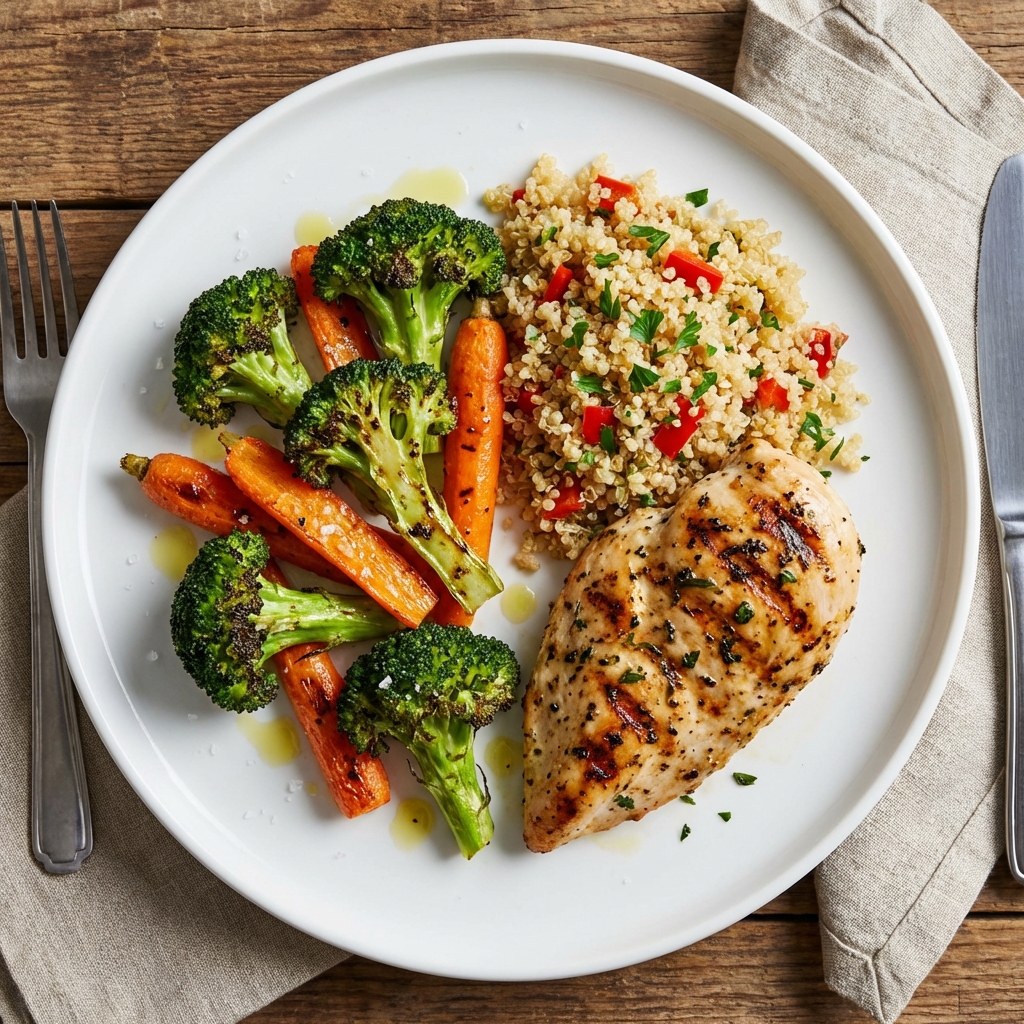
The secret to a balanced meal plate is splitting your available space into three distinct zones.
Zone 1: The Vegetable Half (50%)
Draw a line down the middle of your plate. The entire left side is reserved for non-starchy vegetables.
- What goes here: Spinach, kale, broccoli, Brussels sprouts, green beans, cauliflower, salad greens, peppers, zucchini.
- Why: Vegetables provide “volume.” They physically stretch the stomach, signaling to your brain that you are full. They are packed with fiber, water, and micronutrients, but have very few calories.
- The Trap: Corn, peas, and potatoes count as carbs, not veggies, in this system.
Zone 2: The Protein Quarter (25%)
Take the remaining half of the plate and split it in two. The top quarter is for protein.
- What goes here: Chicken breast, turkey, lean beef, salmon, white fish, eggs, tofu, tempeh, Greek yogurt.
- Why: Protein is the most satiating macronutrient. It builds muscle, boosts metabolism, and prevents you from snacking later.
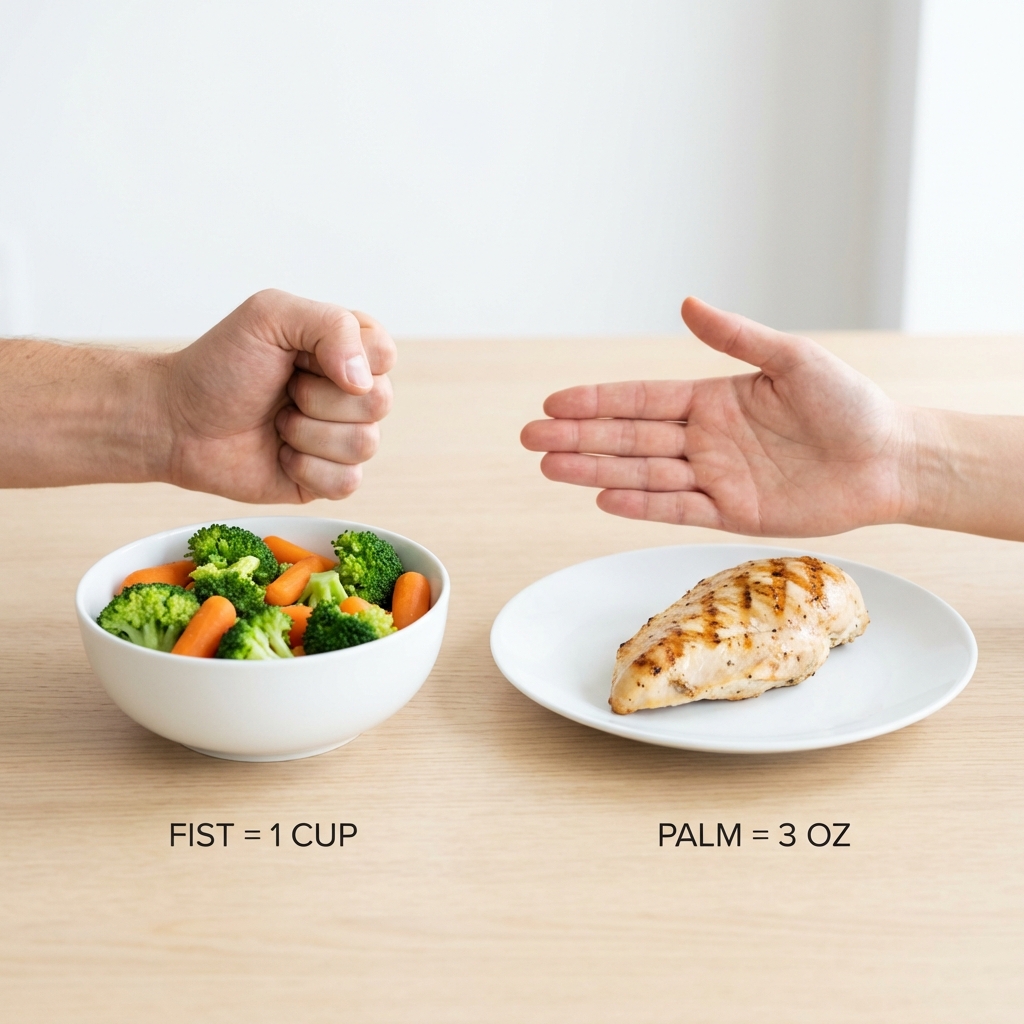
- Visual Cue: This portion should be roughly the size and thickness of your palm (minus the fingers).
Zone 3: The Starch Quarter (25%)
The final quarter is for your energy source.
- What goes here: Sweet potato, brown rice, quinoa, pasta, whole-grain bread, fruit, beans, lentils.
- Why: Carbohydrates provide glucose, the preferred fuel for your brain and muscles. By limiting them to 25%, you get the energy you need without the insulin spike that leads to fat storage.
- Visual Cue: This portion should be the size of your cupped hand.
The “Garnish” of Fat
You might notice fat doesn’t have its own “quarter.” That’s because fats are calorie-dense (9 calories per gram vs. 4 for protein/carbs).
Healthy fats like olive oil, avocado, nuts, and seeds should typically be used as a condiment or cooking medium.
- Visual Cue: Use the size of your thumb (approx. 1 tablespoon) for added fats.
Why This Method Works (The Science)
The balanced plate for weight loss works because it manipulates “Caloric Density.”
- High Satiety: The combination of protein and fiber (veggies) release hormones like PYY and GLP-1 that tell your brain “stop eating.”
- Blood Sugar Control: Eating veggies and protein before or with your carbs slows down the absorption of sugar into the bloodstream. This prevents the “crash” that usually follows a high-carb meal.
- Simplicity: Decision fatigue is real. Knowing that you just need to “fill half the plate with green stuff” is a decision you can make even when you are tired and stressed.
Customizing Your Plate
The 50/25/25 rule is the standard healthy plate portions model, but you can adjust it based on your goals.
For Athletics & Muscle Gain
If you are training hard (CrossFit, Bodybuilding), you need more fuel.
- Shift to: 33% Protein / 33% Carbs / 33% Veggies.
- Or, simply add a second “cupped hand” of carbohydrates to your post-workout meal.
For Low-Carb / Keto
If you are following a low-carb lifestyle.
- Shift to: 50% Veggies / 40% Protein / 10% Healthy Fats.
- Replace the “Starch Quarter” with more leafy greens or a half-avocado.
Bringing it to Life
What does this look like on a Tuesday night?
- Breakfast: Omelet (Protein) loaded with spinach and peppers (Veggies) + a slice of whole-wheat toast (Carbs).
- Lunch: Big Salad (Veggies) with grilled chicken strips (Protein) and a scoop of chickpeas (Carbs).
- Dinner: Roasted Salmon (Protein) with asparagus (Veggies) and a side of wild rice (Carbs).
Summary: Your Plate, Your Control
The plate method nutrition strategy puts you back in control. It stops you from obsessing over numbers and connects you with the food on your table.
It turns abstract goals (“I want to eat healthy”) into a concrete, visual action (“I need to put more green beans on this plate”).
Start tonight. Look down at your dinner. Does it match the picture? If not, how can you adjust the ratios? Small visual shifts lead to massive physical results.
? Frequently Asked Questions
What is the 50/25/25 rule for eating?
Can I lose weight using the plate method?
How do I measure portions with my hands?
Does the balanced plate work for vegetarians?
What counts as a 'complex carbohydrate'?
Where do fats fit on the balanced plate?

About Azeem Iqbal
We are dedicated to providing accurate, easy-to-understand nutritional information for Moe's Southwest Grill fans. Our goal is to help you make informed dining choices without sacrificing flavor.