How to Create a Healthy Meal Plan for the Week
Master the art of meal planning with our beginner-friendly guide. Save time, reduce stress, and hit your nutrition goals with a balanced weekly meal plan.
Azeem Iqbal
Nutrition Expert

Table of Contents
- How to Create a Healthy Meal Plan for the Week
- Why Meal Planning is Your Nutrition Superpower
- Step 1: Check Your Calendar (The Reality Check)
- Step 2: Use “Anchor” Proteins and Grains
- Step 3: The “Simple Healthy Meal Plan” Template
- Step 4: Shop with a Targeted List
- Step 5: Master the “Mini Prep”
- Advanced Strategies for Specific Goals
- Summary: Success is in the System
How to Create a Healthy Meal Plan for the Week
We’ve all been there. It’s 6:00 PM on a Tuesday, you’re tired from work, and the “What’s for dinner?” question starts looming like a dark cloud. Without a plan, you inevitably reach for the takeout app or a bowl of cereal. This cycle not only drains your wallet but also sabotages your health goals, leading to weight gain and festive “sugar crashes” that ruin your productivity.
Healthy meal planning for the week is the single best way to take control of your nutrition, your budget, and your stress levels. It is the bridge between wanting to be healthy and actually being healthy. In this comprehensive guide, we will break down meal planning for beginners into a simple, repeatable system that anyone can follow.
Need a structured start? If you’re looking for specific calorie-controlled menus, browse our curated Diet Plans to find one that fits your goals. Our experts have pre-filtered the best options for weight loss, muscle gain, and general longevity.
Why Meal Planning is Your Nutrition Superpower
Before we dive into the “how,” let’s look at the “why.” A weekly healthy meal plan isn’t just about food; it’s about decision management. When you wait until you are hungry to decide what to eat, your “reptilian brain” takes over. This part of the brain is wired to seek out high-calorie, high-fat, and high-sugar convenience foods. By planning ahead, you engage your prefrontal cortex the logical part of your brain that cares about your long-term health.
1. Eliminates Decision Fatigue
The average adult makes thousands of decisions every day. By the time dinner rolls around, your “decision muscle” is exhausted. Meal planning takes that complex decision off the table, allowing you to follow a pre-written script.
2. Controls Portions and Macros
When you prep ahead, you define the serving size before you sit down to eat. This prevents the “over-pouring” of cereals or the “double-scooping” of rice that often quietly adds hundreds of extra calories to your daily intake. If you are targeting a specific macro ratio, planning is the only way to ensure you hit those numbers with accuracy.
3. Improves Nutritional Quality
You are far more likely to include vegetables and lean proteins when you’re planning ahead than when you’re reacting to hunger. You can intentionally source a variety of micronutrients ensuring you get your Vitamins A, K, and C rather than just eating whatever is in the back of the pantry.
Step 1: Check Your Calendar (The Reality Check)
One of the biggest mistakes in how to plan meals for the week is over-ambition. Beginners often try to cook five new, complex recipes in their first week. This is a recipe for burnout.
- The “High-Stress” Night: Look at your calendar. Do you have a late meeting on Thursday? A gym class on Monday? Plan for leftovers or a 10-minute “no-cook” meal on these nights.
- The Social Night: If you know you’re eating out with friends on Saturday, leave that slot blank. Don’t buy food for it, or it will just end up in the trash.
- The “Prep Day”: Choose one day (usually Sunday) to do the heavy lifting. This is your “CEO time” for your kitchen.
Step 2: Use “Anchor” Proteins and Grains
Effective meal planning tips for healthy eating revolve around versatility. Instead of making five different recipes, cook 2-3 “anchors” that can be used in different ways. This is the secret of professional chefs and high-end restaurants.
Example Anchor: Shredded Chicken or Baked Tofu
- Monday: Chicken/Tofu and roasted veggie bowl with lemon tahini.
- Tuesday: Chicken/Tofu tacos with fresh salsa and cabbage slaw.
- Wednesday: High-protein kale salad with shredded chicken/tofu.
Example Anchor: Bulk Grains (Quinoa or Brown Rice)
Grains can be used as a side for salmon, a base for a Mediterranean stir-fry, or even mixed into a breakfast bowl with nuts and fruit. By cooking a large batch on Sunday, you save 20-30 minutes of boiling time during the work week.
Step 3: The “Simple Healthy Meal Plan” Template
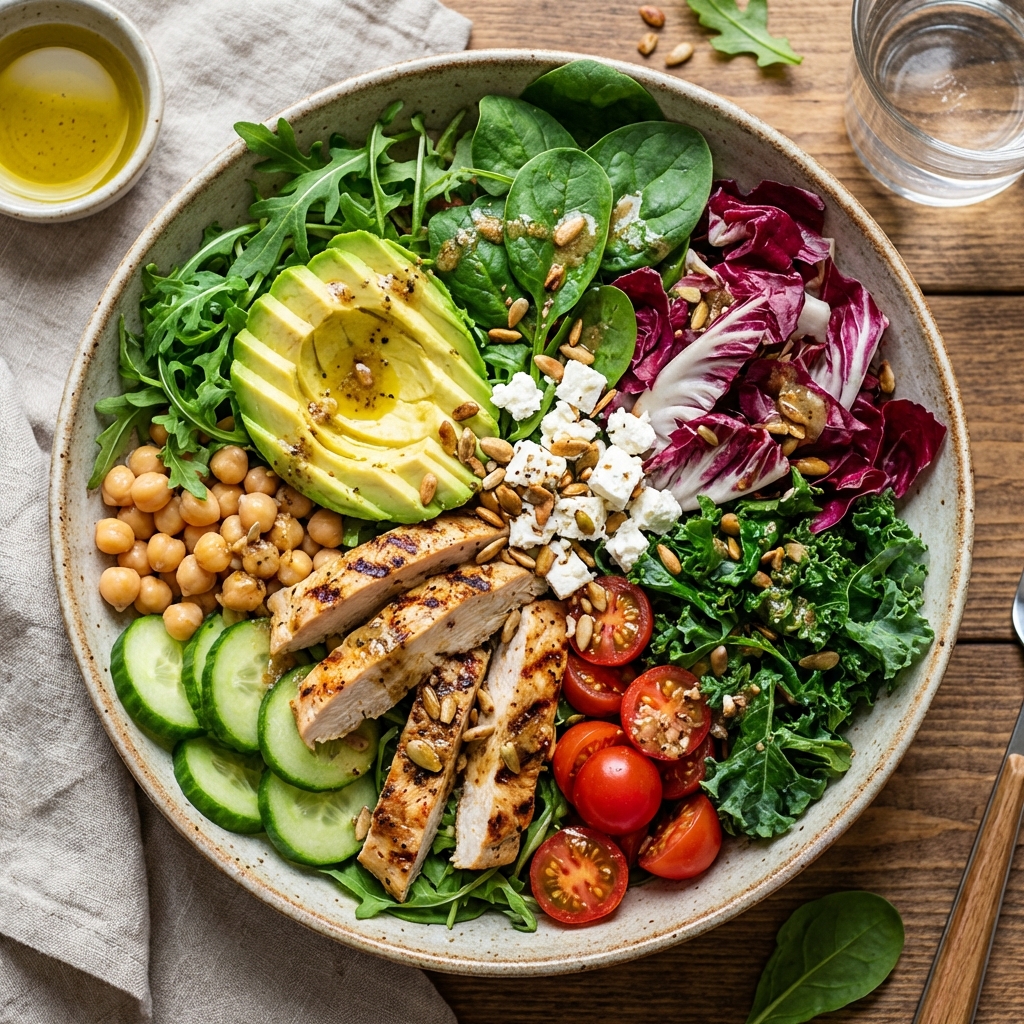
To keep your balanced weekly meal plan simple, use this basic visual formula for every plate. You don’t even need a scale if you follow this structure:
- 50% Non-Starchy Vegetables: This is the most critical rule. By filling half your plate with volume-heavy, calorie-light greens (broccoli, spinach, peppers), you physically stretch your stomach and trigger “fullness” signals before you’ve eaten too many calories.
- 25% Lean Protein: This preserves muscle mass and keeps you satisfied between meals. Think chicken, turkey, white fish, eggs, or legumes.
- 25% Complex Carbohydrates: These provide the steady energy your brain needs to function. Opt for sweet potatoes, oats, whole-grain bread, or quinoa.
- The “Garnish” of Healthy Fats: Use thumb-sized portions of avocado, olive oil, or nuts to provide essential fatty acids and flavor.
Step 4: Shop with a Targeted List
Once you’ve mapped out your family meal planning healthy schedule, translate it into a grocery list organized by the store layout. In the US, this typically means:
- Produce: Where 60% of your cart should live.
- Meat/Protein: Focus on lean cuts or bulk packs.
- Grains/Pantry: Stick to whole versions (brown vs white).
- Frozen: The underrated MVP of the budget-friendly meal plan.
Organization prevents the “aimless wander” through the aisles where processed snacks and high-sugar cereals tend to jump into the cart. If it isn’t on the list, it doesn’t enter the house. This is the first line of defense for a healthy lifestyle.
Step 5: Master the “Mini Prep”
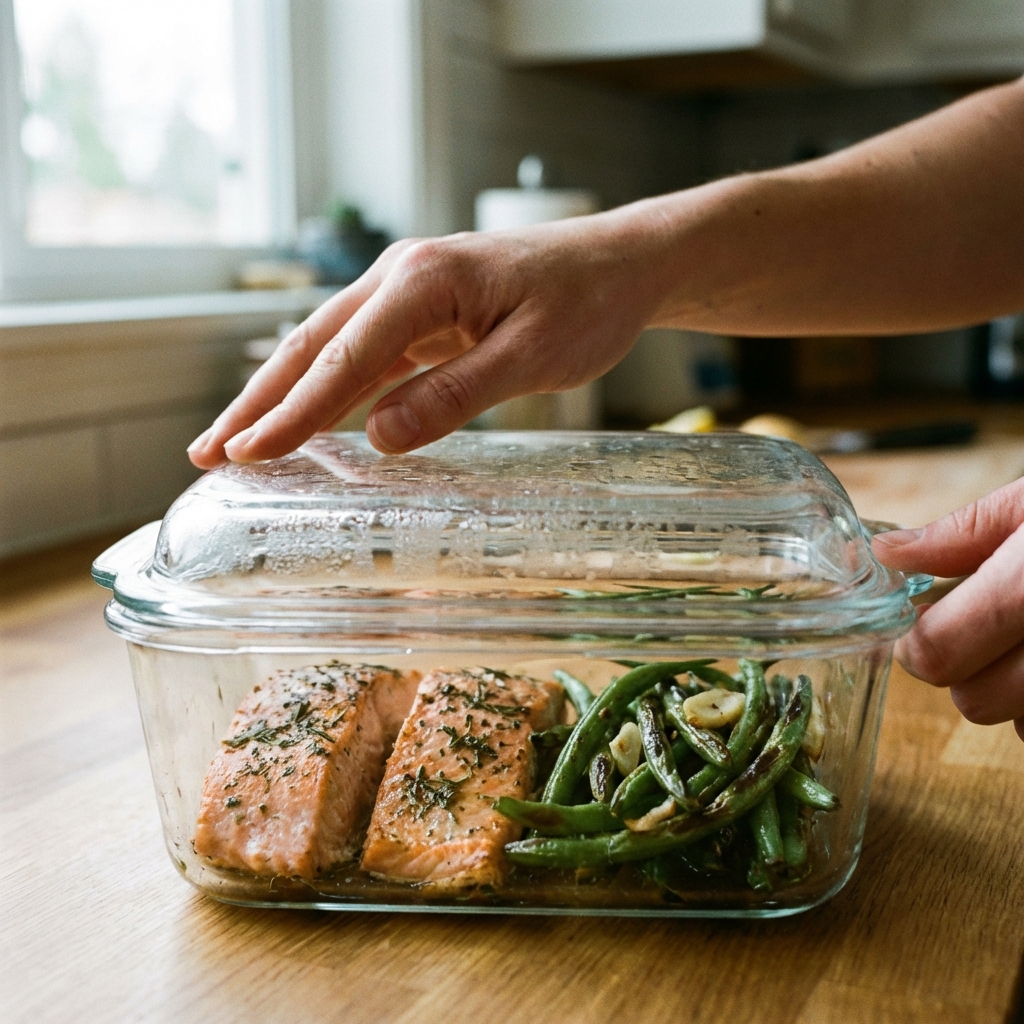
You don’t have to spend 6 hours in the kitchen to have a healthy meal plan for the week. A “mini prep” can be done in 60-90 minutes and provides 80% of the benefits:
- The “Produce Chop”: Wash and chop all the hard vegetables immediately after shopping. You are 80% more likely to eat bell peppers, onions, and carrots if they are already sliced and sitting in the fridge ready to go.
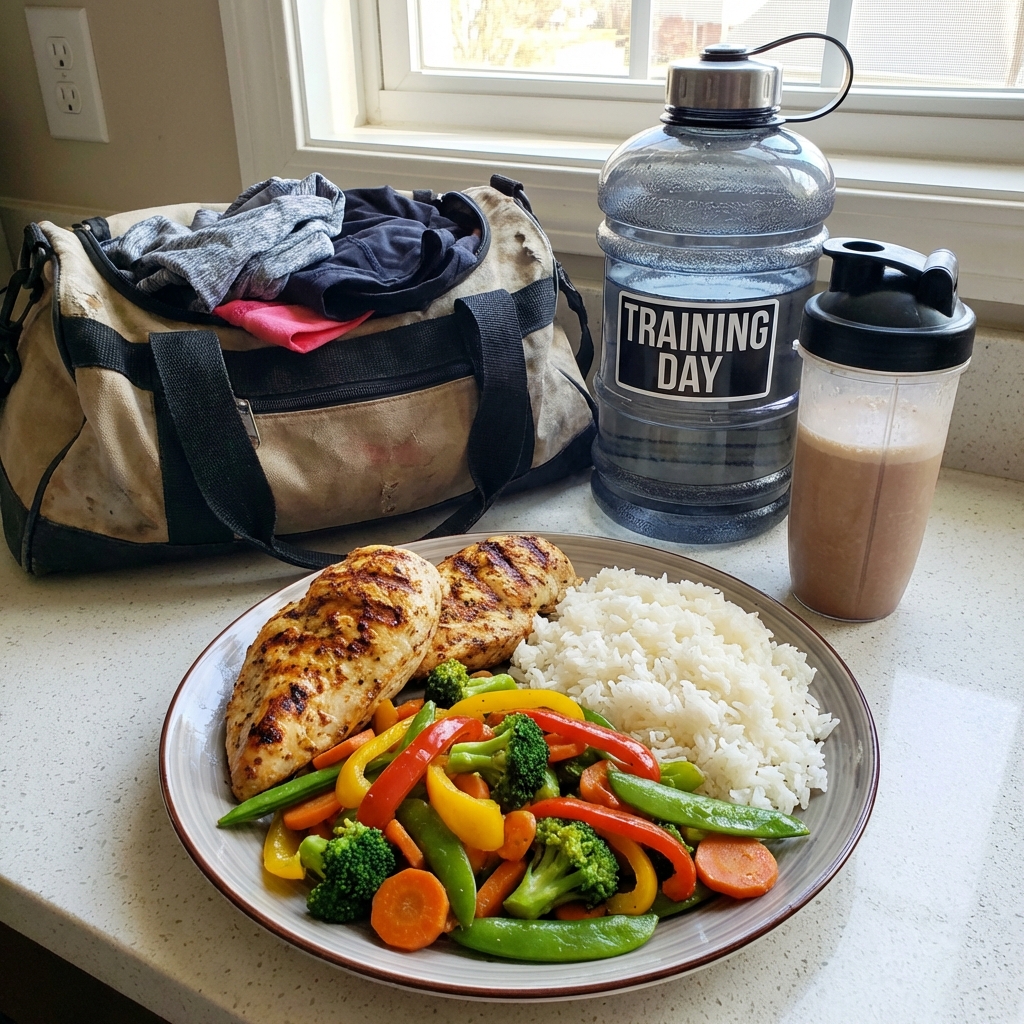
- The “Protein Roast”: Throw a tray of chicken breasts or a block of tofu in the oven while you’re cleaning the kitchen. That’s your lunch for the next four days.
- The “Emergency Jar”: Always have one “emergency” healthy meal ready like a low-sodium canned soup or a packet of tuna. This is for the night when the plan falls apart and you’re tempted by pizza.
Advanced Strategies for Specific Goals
Meal Planning for Weight Maintenance
If you’ve already hit your goal weight, the aim is consistency. Use our TDEE Calculator to find your maintenance calories, and then structure your weekly plan so that your daily average hits that number. You might choose to eat slightly less on weekdays to allow for a “fun” meal on the weekend this is a perfectly valid planning strategy known as calorie cycling.
Meal Planning for Busy People
If you have zero time, lean on high-quality convenience. Think frozen vegetables, pre-washed salad mixes, and rotisserie chickens. You don’t have to cook everything from scratch to have a healthy meal plan. You just have to assemble it.
Family Meal Planning
The biggest hurdle here is picky eaters. Start a “Theme Night” tradition.
- Theme: Burrito Bowl Night.
- The Plan: Cook a big pot of rice, black beans, and chicken. Put out bowls of corn, salsa, avocado, and lettuce. The kids get to build their own, which makes them feel in control, while you can ensure your bowl is 50% lettuce and 25% protein.
Summary: Success is in the System
How to plan meals for the week is a skill, not a talent. Every time you do it, you get faster and more efficient. Within a month, you’ll be able to plan and shop for a whole week in under two hours. The peace of mind that comes from knowing exactly what you’re eating and knowing it supports your health is worth every minute of that time.
Don’t let another Sunday pass without setting your intentions. Start with three days, master those, and watch how it transforms your energy and your waistline. For more support, combine your new skills with our scientifically-backed dietary programs and take the guesswork out of your transformation.
? Frequently Asked Questions
How do I start meal planning as a beginner?
How can I meal plan for a busy schedule?
What should be in a balanced weekly meal plan?
How do I meal plan for weight maintenance?
Can I meal plan for a whole family?
Does meal planning save money?

About Azeem Iqbal
We are dedicated to providing accurate, easy-to-understand nutritional information for Moe's Southwest Grill fans. Our goal is to help you make informed dining choices without sacrificing flavor.