How Many Calories Should You Eat Per Day? (By Age & Gender)
Stop guessing your daily intake. Discover the exact calorie needs for men and women by age, and learn how to adjust for weight loss, maintenance, or muscle gain.
Azeem Iqbal
Nutrition Expert
How Many Calories Should You Eat Per Day? (By Age & Gender)
One of the most common questions in the world of health and fitness is deceptively simple: “How many calories should I eat?”
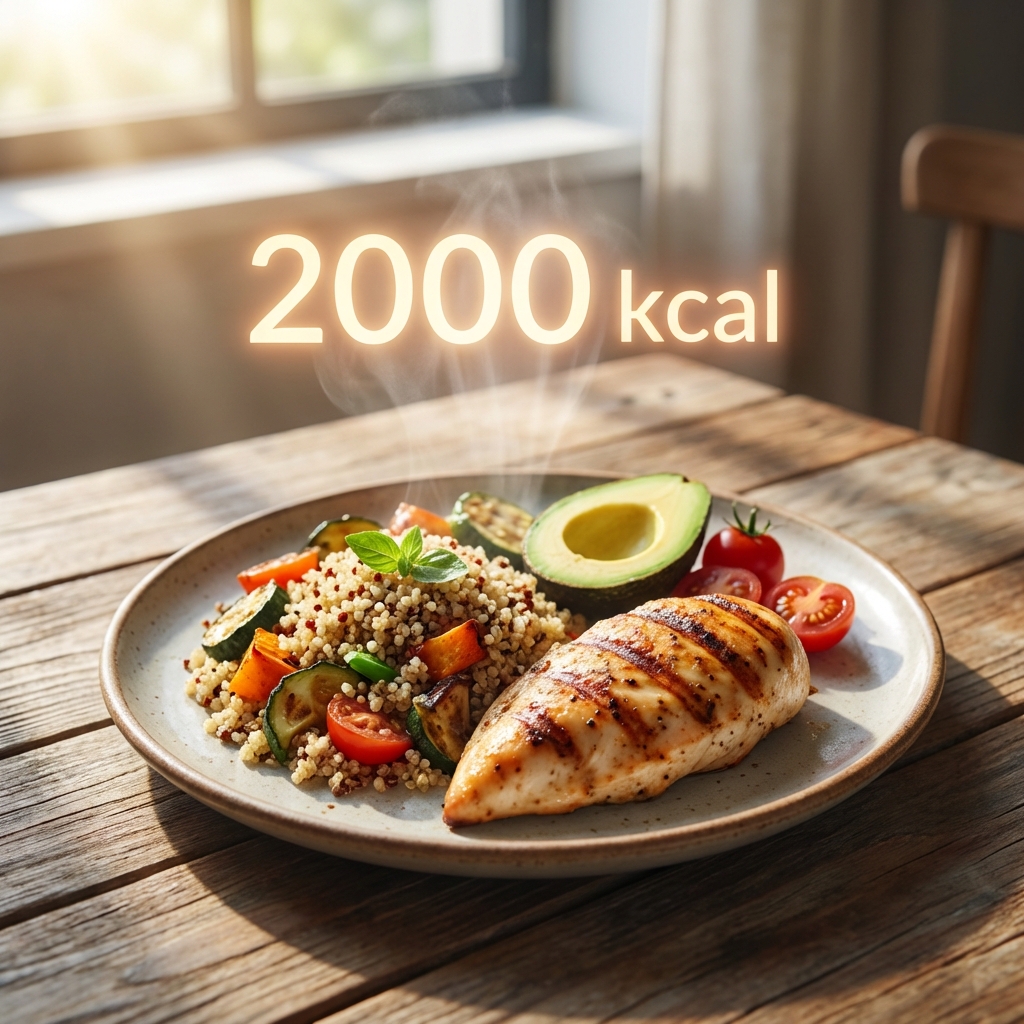
You might see “2,000 calories” written on nutrition labels, but that is just a rough industry average. It is not your number. If you are a 6ft tall active man, 2,000 calories is a diet. If you are a 5ft sedentary woman, 2,000 calories might cause steady weight gain.
Calories are the fuel that powers every beat of your heart, every step you take, and every thought you have. Getting the number right is the “secret code” to unlocking your body goals whether that’s shedding stubborn fat, building lean muscle, or simply maintaining your energy levels as you age.
In this guide, we will break down exactly how calorie needs change by age and gender, and how you can find your perfect number.
Skip the math: Want your exact number right now? rigid Use our free Calorie Calculator to get your personalized daily target in seconds.
What Is a Calorie, Really?
Before we count them, we have to understand them. A calorie is not a physical “thing” it is a unit of measurement. Specifically, it measures energy.
Biologically, your body treats food like a battery.
- Calories In: The energy you get from food and drink.
- Calories Out: The energy you burn to keep your body alive (BMR) + the energy you burn moving (Activity).
The Energy Balance Equation
This is the unchangeable law of physics that governs your weight:
- Calorie Surplus: Eating MORE than you burn = Weight Gain.
- Calorie Deficit: Eating LESS than you burn = Weight Loss.
- Maintenance: Eating the SAME amount = Weight Stability.
Most people fail at weight loss because they are guessing their “Calories Out” side of the equation.
Recommended Calorie Intake by Age and Gender
While every individual is unique, scientific averages give us a solid starting point. These figures come from the Dietary Guidelines for Americans and are based on moderate activity levels.
1. Daily Calories for Women
Women generally have less muscle mass and smaller frames than men, meaning their metabolic engines require less fuel.
- Age 19–25: This is often peak metabolic activity.
- Sedentary: 2,000
- Active: 2,400
- Age 26–50: Metabolism begins to settle.
- Sedentary: 1,800
- Active: 2,200
- Age 51+: Hormonal changes (menopause) and muscle loss slow the burn rate.
- Sedentary: 1,600
- Active: 2,000+
Key Takeaway for Women: If you are over 40 and eating like you did when you were 20, you will likely gain weight. This isn’t your fault; it’s biology. To counteract this adjustments, you need to either eat slightly less or (better yet) add strength training to build metabolism-boosting muscle.
2. Daily Calories for Men
Men naturally carry more lean muscle mass, which is “expensive” tissue it burns calories just to exist. As a result, men typically have significantly higher calorie allowances.
- Age 19–25:
- Sedentary: 2,400
- Active: 3,000
- Age 26–50:
- Sedentary: 2,200
- Active: 2,800
- Age 51+: Testosterone levels drop, often leading to reduced muscle mass.
- Sedentary: 2,000
- Active: 2,400–2,800
Key Takeaway for Men: The drop-off for men is steep after age 50. This is often why the “Dad Bod” phenomenon occurs lifestyle activity drops, dietary habits stay the same, and the surplus calories turn into visceral fat.

Factors That Change Your Number
The averages above are just that averages. Your specific “Calories Per Day” number is influenced by four main levers:
1. Basal Metabolic Rate (BMR)
This is the energy your body burns if you stayed in bed all day. It accounts for 60-70% of your total calorie burn! BMR is determined by your height, weight, age, and genetics. You can’t control your height or age, but you can control your weight.
2. Physical Activity Level (PAL)
This is the multiplier.
- Sedentary: Desk job, no exercise. (BMR x 1.2)
- Lightly Active: Walking, light yoga 1-3x/week. (BMR x 1.375)
- Moderately Active: Gym, sports 3-5x/week. (BMR x 1.55)
- Very Active: Heavy lifting, labor job, daily training. (BMR x 1.725)
Most people overestimate their activity. Be honest with yourself!
3. Thermic Effect of Food (TEF)
Did you know eating burns calories? Digestion requires energy.
- Protein: High TEF (Your body burns 20-30% of protein calories just digesting them!).
- Carbs: Moderate TEF (5-10%).
- Fats: Low TEF (0-3%). Eating a high-protein diet literally boosts your metabolism.
4. Body Composition
Two people can weigh 200lbs, but if one is 10% body fat (muscle) and the other is 30% body fat, the muscular person will burn significantly more calories per day at rest. Muscle is metabolic gold.
How to Calculate Your Needs for Weight Loss
If your goal is to lose weight, you need a Calorie Deficit. The standard rule of thumb is: 3,500 Calories = 1 Pound of Fat.
To lose 1 lb per week, you need a deficit of 500 calories per day. (500 x 7 days = 3,500).
The Step-by-Step Method:
- Find your TDEE (Total Daily Energy Expenditure): This is your maintenance number. Use our Calorie Calculator to find it quickly.
- Subtract 300 to 500: This is your “Cutting” number.
- Track for 2 Weeks: Eat at this number. Weigh yourself daily and take the average.
- Adjust:
- Lost 0.5-2 lbs? Perfect. Keep going.
- Lost nothing? Lower by another 100-200.
- Lost too much (>2lbs) or feel exhausted? Increase by 200.
Warning: Never drop your calories too low (e.g., below 1,200 for women or 1,500 for men) without medical supervision. This can crash your metabolism and lead to nutrient deficiencies.
Common Mistakes When Counting Calories
1. Ignoring Liquid Calories
A Starbucks Frappuccino can have 400 calories. A large soda has 300. A craft beer has 250. These do not make you full, but they count towards your total. Swapping these for water or zero-calorie alternatives is the easiest way to cut calories without hunger.
2. Eyeballing Portions
“That looks like a tablespoon of peanut butter.” Reality: It was three tablespoons. Peanut butter, oil, and salad dressings are extremely calorie-dense. Being off by a tiny amount can add 200-300 hidden calories to your day. For the first few weeks, use a food scale to learn what a serving size actually looks like.
3. Eating Back Exercise Calories
Fitness trackers are notoriously inaccurate. If your watch says you burned 600 calories on a run, you likely burned closer to 300-400. If you “eat back” all 600, you might accidentally put yourself in a surplus. Treat exercise calories as a bonus buffer, not a budget to spend.
4. Over-Restricting “Bad” Foods
If you love chocolate and ban it completely, you will likely binge on it later. A better approach is the “80/20 Rule”: 80% of your calories come from nutrient-dense whole foods (lean meats, veggies, fruits), and 20% come from foods you enjoy. This makes the diet sustainable.
Conclusion: It’s Just Data
Knowing how many calories you should eat per day removes the emotion from dieting. It stops being about “good days” and “bad days” and starts being about data.
Your body is a machine. If you give it the right amount of fuel, it runs efficiently. If you overfill the tank, it stores the excess.
Don’t guess. Calculate. Head over to the Calorie Calculator now, enter your stats, and take control of your nutrition journey today.
? Frequently Asked Questions
How many calories should I eat a day?
How many calories does a woman need to lose weight?
Do calorie needs decrease with age?
Is 1200 calories enough for a day?
How do I calculate my maintenance calories?
Does muscle burn more calories than fat?

About Azeem Iqbal
We are dedicated to providing accurate, easy-to-understand nutritional information for Moe's Southwest Grill fans. Our goal is to help you make informed dining choices without sacrificing flavor.