Carbs vs Fats: What’s Better for Training?
The great debate: Should you fuel with pasta or peanut butter? We compare high-carb vs high-fat diets and which is best for your specific training style.
Azeem Iqbal
Nutrition Expert
Carbs vs Fats: What’s Better for Training?
It is the oldest war in nutrition. On one side: Team Carbs. pasta parties, rice bowls, and the belief that glycogen is king. On the other side: Team Fats. Keto, Paleo, and the belief that you should burn “butter not bread.”
So, who is right? As with most things in science, the answer is: It Depends. Specifically, it depends on how you train.
Your body is like a hybrid car. It has two engines:
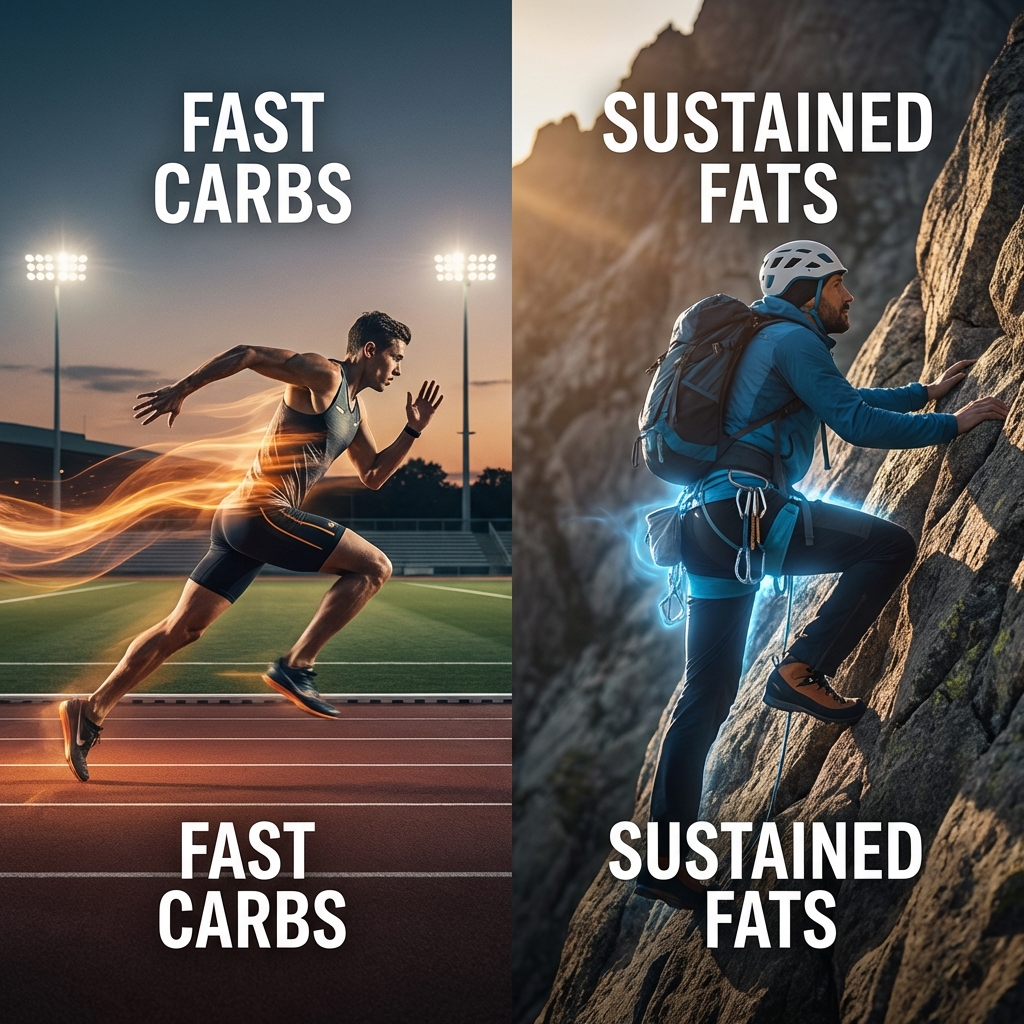
- The Gas Engine (Glycogen/Carbs): Fast, explosive, high power, burns out quickly.
- The Electric Battery (Fat): Slow, steady, infinite range, low power.
Which engine you use depends on the speed you are driving.
Need to set your ratios? Don’t guess. Use our Carb Calculator to find your personalized intake.
The Case for Carbs (High Intensity)
If your training involves Force, Speed, or Power, you need Carbs.
- Activities: Bodybuilding, CrossFit, Sprinting, HIIT, Powerlifting.
When your heart rate goes above ~70% of its max, your body typically cannot burn fat fast enough to create ATP (energy). It must switch to burning Glucose (Carbs). If you try to do a heavy squat session on a Keto diet, you might feel “flat” or weak. This is because your “Gas Engine” is empty.
Verdict: If you lift heavy or move fast, prioritize Carbs (40-50% of diet).
The Case for Fats (Low Intensity / Endurance)
If your training involves Duration and Consistency, Fats are incredible.
- Activities: Ultra-marathons, long-distance hiking, Iron Man triathlons, very steady state cardio.
The human body can only store about 2,000 calories of Carbs (Glycogen). Once that wall is hit, you “bonk.” However, even a lean person has 100,000+ calories of stored body fat. If you train your body to be “Fat Adapted” (burning fat for fuel), you tap into a virtually unlimited energy source. This is why many ultra-runners love high-fat diets.
Verdict: If you go long and slow, prioritize Fats (40-60% of diet).
The Middle Ground: Athletic Balance
For 90% of gym-goers, the answer is Balance. You aren’t running 50 miles, but you also aren’t an Olympic lifter.
A balanced “Zone” approach usually yields the best aesthetics and performance:
- Protein: 30% (Anchor)
- Carbs: 35-40% (Fuel the workout)
- Fats: 30-35% (Hormonal health & tasty meals)
Important Note on Fat & Hormones
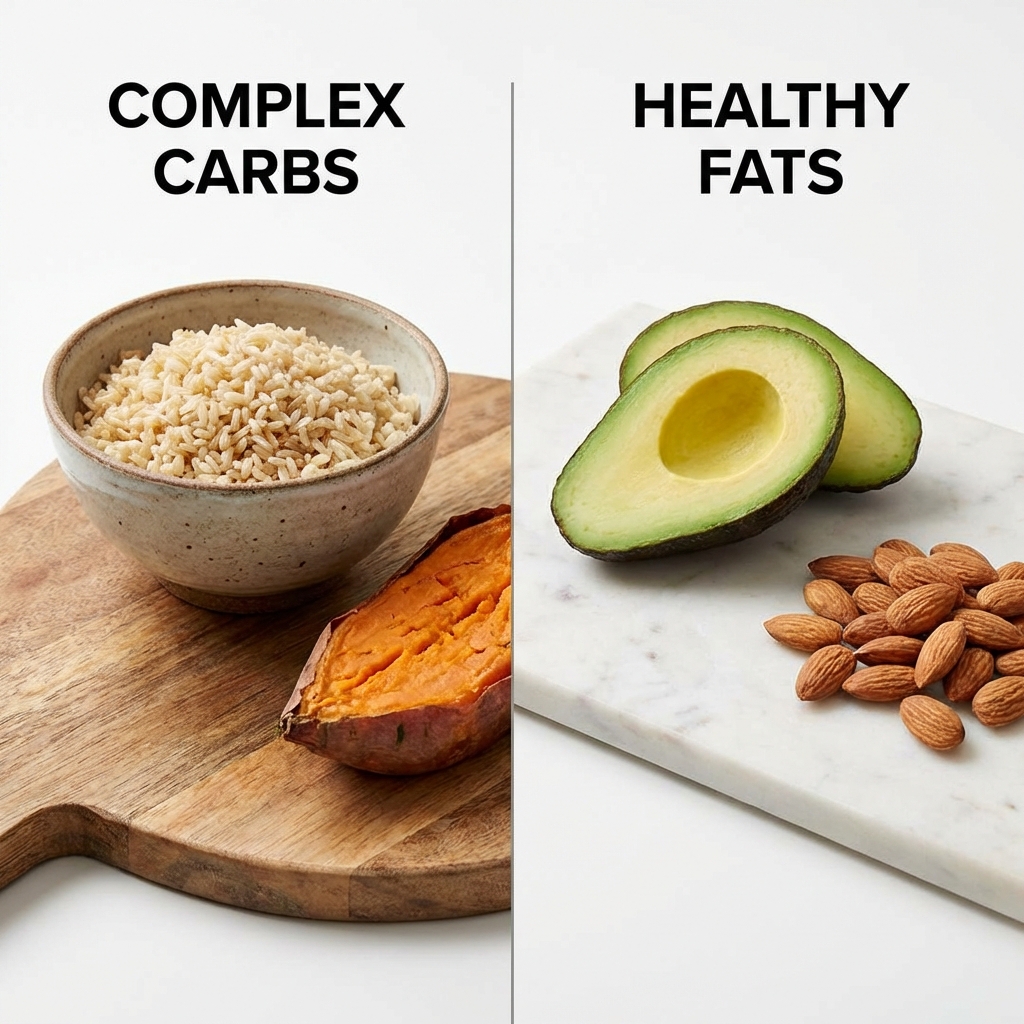
Even if you are “Team Carb,” you can never cut Fat to zero. Your body needs dietary fat to produce testosterone. If you go too low fat (e.g., under 15%), your testosterone levels can drop, which ironically KILLS your muscle growth and energy. Always keep a healthy baseline of fats (Avocados, Nuts, Eggs).
Summary
- Sprinting / Lifting? Eat the Pasta. Carbs are your friend.
- Walking / Ultra-running? Eat the Avocado. Fat is your fuel.
- Just want to look good naked? Balance both.
Don’t treat macronutrients like a religion. Treat them like a toolkit. Use the tool that fits the job.
Calculate your split: See exactly how many grams of Carbs and Fats you need today with our Macro Calculator.
? Frequently Asked Questions
Are carbs better than fats for exercise?
Can I build muscle on a low carb diet?
Who should prioritize fats for training?
What should my macro ratio be?
Do fats make you fat?
What is carb cycling?

About Azeem Iqbal
We are dedicated to providing accurate, easy-to-understand nutritional information for Moe's Southwest Grill fans. Our goal is to help you make informed dining choices without sacrificing flavor.